
CCNA Training and Certification
Build a foundation in routing, switching, IP addressing, network security, and automation through practical networking study.
Enrollment offer: CCNA + IT 360 Bundle. Review the final amount and included access on checkout.
Need help choosing? Request career guidance
Upcoming batches for CCNA Training and Certification
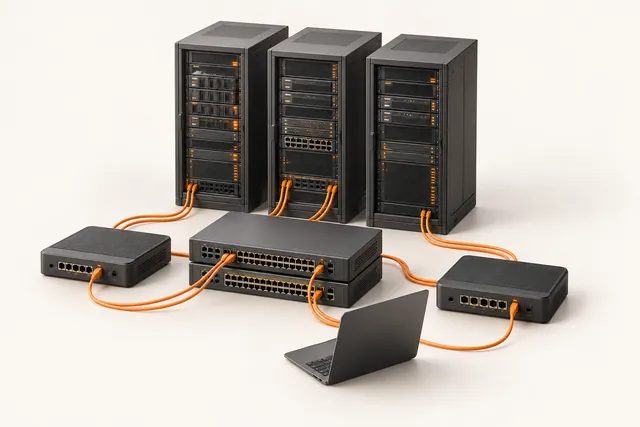
All upcoming batchesPick the batch that fits your schedule and enroll online to lock the batch price before the seats run out.
About this course.
The Cisco Certified Network Associate (CCNA) is a beginner-level technical certification course offered by Cisco, serving as a stepping stone in your IT career and providing you with all the necessary skills required in the field of Networking. This is one of the most popular & in-demand Networking certifications in the industry. The CCNA Certification for Beginners covers the essentials of networking, such as Network Security Fundamentals, Automation, Programmability, and Routing & Switching. You’ll get in-depth CCNA training after enrolling & can become a skilled Network Engineer in the tech world.
Skills you’ll develop.
- Networking basics and components
- IPv4/IPv6 addressing and subnetting
- Switching and VLANs
- Routing protocols (static, OSPF)
- Network services (NAT, DHCP, DNS)
- Network security and VPNs
- Wireless security
- Automation and programmability basics
Built around the skills you need.
Explore each area of the curriculum and the topics covered.
Detailed CCNA Course Curriculum Breakdown — What You’ll Learn
This course follows the Cisco CCNA 200-301 training curriculum and covers all key networking domains required to become a job-ready network professional.
Networking Fundamentals
- Network Components - You will learn about the roles and functions of network components.
- Network Topology Architecture - You will understand the characteristics of network topology architectures.
- Compare TCP to UDP - Learn the difference between these two Internet protocols.
- IPv4 and IPv6 Addressing - Configure and verify IPv4 addressing and subnetting
- Compare IPv6 Address Types - Global unicast, Unique local, Link-local, Anycast, Multicast, and Modified EUI 64
- Switching -Understand switching concepts.
Network Access
- Multiple switches: Configure and verify VLANs spanning multiple switches.
- Spanning Tree Protocol (STP): Understand the need for Rapid PVST+ Spanning Tree Protocol and identify its basic operations.
- WLAN: Understand physical infrastructure connections of WLAN components.
IP Connectivity
- Routing Table: Interpret the components of a routing table.
- Router: Determine how a router decides by default.
- Static Routing: Learn to configure and verify IPv4 and IPv6 static routing
- OSPF (v2): Configure and verify single area OSPF (v2).
Internet Protocol (IP) Services
- Network Address Translation (NAT): Learn to configure and verify inside source NAT using static and pools.
- Network Time Protocol (NTP): Learn to configure and verify NTP operating in client and server mode.
- DHCP and DNS: Learn the difference between the roles of Dynamic Host Configuration Protocol (DHCP) and Domain Name System (DNS) within the network.
- SNMP and Syslog: Explain the functions of SNMP in network operations and the use of Syslog features.
- Per-Hop Behavior (PHB): Explain the forwarding PHB for QoS.
- TFTP/ FTP: Explain the functions of TFTP and FTP in a network.
Security Fundamentals
- Key Security Concepts - Threats, Vulnerabilities, Exploits, and Mitigation Techniques.
- Security Program Elements - Describe the Security Program Elements.
- Virtual Private Networks (VPNs) - Define remote access and site-to-site VPNs.
- Security Features - Configure Layer 2 security features.
- Wireless Security Protocols - Describe wireless security protocols.
- WLAN - Learn to configure WLAN.
Automation and Programmability
- Network Management: Explain how automation impacts network management.
- Controller-based and Software-defined architectures: Learn to distinguish between controller-based and software-defined architectures (overlay, underlay & fabric).
- Device Management: Learn to compare traditional campus device management with Cisco DNA Center.
- REST-based APIs: Describe the characteristics of REST-based APIs.
- Configuration Management: Recognize the capabilities of configuration management mechanisms.
- JSON (JavaScript Object Notation): Interpret JSON encoded data.
More about this course.
CCNA Certification | Master Networking with Cisco CCNA Course
The CCNA certification is widely regarded as the ideal entry point for anyone looking to understand how modern networks operate. From how data moves across devices to how networks stay secure and reliable, CCNA introduces you to the core principles that power today’s digital world.
This guide walks you through what the certification covers, the skills you’ll gain, how the exam works, and the career opportunities it can open up. Whether you’re a student, a working professional, or someone transitioning into IT, you’ll find clear insights to help you decide if this path is right for you—and how to prepare for it with confidence.
What is the Cisco CCNA course?
CCNA stands for Cisco Certified Network Associate, which is one of the most recognized associate-level certifications offered by Cisco, a tech giant. The CCNA certification validates skills, ability, and expertise in fixing, configuring, and verifying IPv4 and troubleshooting networks. As businesses grow, their dependence on IT services to run operations smoothly and profitably increases.
CCNA professionals operate at the technical end, ensuring the smooth performance of network devices, such as routers and switches, networking and security, and firewalls. It also helps in mastering the fundamentals of networking, automation, and programmability.
What are the different Cisco CCNA certifications?
The Cisco CCNA certification has developed over the years. Currently, there are different certifications focusing on-
- CCNA Security
- Cisco CCNA Routing and Switching
- CCNA Service Providers
- CCNA Data Centers
- CCNA Video
- CCNA Voice
- CCNA Collaboration
- CCNA Wireless
NOTE: Opting for the Cisco CCNA courses is an individual choice. You need to choose one of the particular online CCNA courses, depending on the available job profile.
How to Earn CCNA Certification?
To earn the Cisco CCNA certification in India, follow the given steps-
- Training for the exam: When it comes to building a strong foundation in networking, few credentials carry as much weight as the CCNA training & certification. The program goes well beyond exam preparation — it equips you with practical knowledge of network topology architectures, layer 2 technologies, and essential security concepts that employers actually look for. For those ready to take the first step, platforms like Network Kings offer a practical, affordable path forward, with training delivered by working industry engineers who bring real-world experience to every session—not just textbook theory. Learn the basics of networking at the CCNA level.
- Examination Process: Schedule your exam after Pearson VUE receives payment. Pearson VUE allows you to take your certification exam securely from home or the office. With a simple check-in involving ID verification, face-matching technology, and a live greeter, you can test without leaving the comfort of your home.
NOTE: Know the curriculum for the CCNA program.
- Passing Score: To successfully clear the exam, candidates are generally expected to achieve a score in the range of 85–90% or above. Widely recognized in the industry, this certification is also known as the Cisco Routing and Switching credential—a name that reflects its strong emphasis on core networking skills.
- Certification Validity: Once earned, the certification remains valid for three years from the date of issue, giving professionals a solid window to apply their skills in the field before renewal is required.
- Recertification Process: To keep the certification current and active, holders must go through the recertification process every three-year cycle. This ensures that certified professionals stay up to date with evolving networking technologies and industry standards
What is the roadmap to clear the CCNA 200-301 certification exam?
To earn the Cisco Certified Network Associate (CCNA) credential, candidates must pass the official CCNA 200-301 exam. This exam evaluates your understanding of networking fundamentals, IP connectivity, security basics, automation, and more. While the test may seem challenging, it becomes much easier with the right study plan, practical labs, and consistent practice. By focusing on key networking concepts and real-world scenarios, you can confidently prepare for the exam and move one step closer to building a successful career in networking. Below are some useful tips to help you prepare effectively and achieve the best results.
- Get familiar with the topics and CCNA 200‑301 syllabus: The first step that you need to take before preparing for any examination is to keep yourself up-to-date with the exam topics that need to be covered, the syllabus, and the exam. The CCNA course covers a broad range of topics, which can be overwhelming for first-time exam takers. The syllabus helps you master basic networking skills in detail.
- A study schedule: If you are a student currently involved in full-time studies, you may find it strenuous to focus on the online CCNA training course exam. That is why you should make a study schedule that may work for you. Once you identify the topics to be covered, assign days, weeks, or hours to work on them.
- 24/7 lab practice: A hands-on approach to learning can help make concepts less abstract and easier to understand. By watching full CCNA tutorial videos and lab practice, you get real-world experience using Cisco products and a better understanding of more advanced CCNA topics.
- The CCNA online certification training from Network Kings offers 24/7 lab training for the Cisco CCNA certification, covering configuration and troubleshooting, addressing and subnetting, and implementation and administration, with a hands-on approach to prepare for real-world experience.
- Access to the study material - Network Kings offers you the Cisco CCNA training course with all the study material required, under the assistance of industry experts who guide you with complete knowledge of all the topics in the syllabus, with real-world information on how to crack the exam.
What does the Cisco Certified Network Associate (CCNA) course include?
The following topics are general guidelines for what is likely to be tested and included in the exam-
- Network fundamentals
- LAN switching technologies
- IPv4 and IPv6 routing technologies
- Wireless security protocols
- AP and WLC management access
- WLC management access connections
- WAN technologies
- Infrastructure services
- Infrastructure security
- Infrastructure management
- IP Addressing Schemes
What are the job opportunities after clearing the CCNA exam?
After clearing the CCNA certification exam, you can go for job roles like network engineer and more, such as:
- Network Administrator
- Network Engineer
- Network Analyst
- Network Security Analyst
- Network Support Engineer
- Systems Administrator
- Systems Engineer
- Technical Support Engineer
- IT Manager
- IT Project Manager
- IT Consultant
- Network Consultant
- Information Security Analyst
- Cybersecurity Analyst
- Network Architect
- Wireless Network Engineer
- VoIP Engineer
- Cloud Network Engineer
- Network Operations Center (NOC) Technician
- Technical Trainer
NOTE: Prepare the CCNA Interview Questions & Answers before applying.
What are the prerequisites for the CCNA course?
The CCNA certification course does not require any prerequisites. It can be opted for by individuals from both IT and non-IT backgrounds. If you are passionate enough to learn and familiar with information technology, be assured that these are the only required prerequisites for the exam. Thus, master the Cisco CCNA exam to earn the networking certification.
NOTE: CCNA candidates are requested to ensure they have their laptops and a good internet connection. You can take classes from a mobile phone, but a pc is mandatory for lab practice.
Why take Cisco CCNA training online with Network Kings?
- Network Kings is the best ed-tech platform and not just an ordinary training center. You can pursue our online CCNA training & certification program and learn Cisco security and networking concepts in detail. You can experience the worth and quality of our complete courses by enrolling in a FREE live demo class.
- You can enhance your knowledge and skills from home.
- Prepare for the new CCNA 200-301 exam and build a promising career in networking.
- Our training courses are available in Hindi and English.
- Timings are flexible here, so you can learn without affecting your working or study hours.
- Students also need to work on real scenarios to master the comprehensive CCNA lab.
- Network kings has experienced trainers and industry experts who provide in-depth knowledge of this particular Cisco course, like the CCNA online training course.
- Our CCNA course online can help you pass the exam. The course includes 60+ hours of recordings and 60+ hours of live CCNA online classes covering networking concepts, such as
- Basics of network fundamentals
- Routing
- Switching
- Security Fundamentals
- NAT
- DHCP
- IP services
- Virtual labs
If you are looking to learn CCNA Online, we provide live, interactive classes with our industry expert trainers. And if you want to watch our recorded sessions, you can easily find free CCNA online training on our YouTube channel. This gives you a chance to explore our teaching style and understand the basics before joining the complete course.
Your questions, answered.
What makes CCNA training essential for building a networking career?
CCNA training provides a strong foundation in networking concepts like routing, switching, IP addressing, and network security. It helps learners develop practical skills required to manage real-world network infrastructures effectively.
How is a CCNA certification different from other entry-level IT certifications?
The CCNA certification is highly respected because it focuses on both theoretical knowledge and hands-on networking skills. Unlike many beginner certifications, it prepares candidates to configure and troubleshoot live networks.
What should I expect from a high-quality CCNA course?
A well-structured CCNA course typically includes in-depth concepts, lab-based practice, real-time scenarios, and exam-focused preparation. It should also cover automation basics and modern networking trends.
Is enrolling in a CCNA online course a good option for beginners?
Yes, a CCNA online course is ideal for beginners as it offers flexibility, structured learning, and access to recorded sessions. Many programs also include live labs to enhance practical understanding.
How does a CCNA online course in India benefit aspiring network engineers?
A CCNA online course in India is often cost-effective and tailored to industry requirements. It allows learners to gain globally recognized skills while studying from home with access to expert trainers.
What topics are covered in a CCNA certification course online?
A CCNA certification course online covers networking fundamentals, IP connectivity, network access, security basics, automation, and programmability, along with real-world configuration practices.
How effective is CCNA online training for hands-on learning?
CCNA online training can be highly effective when it includes virtual labs, simulations, and guided practice sessions. These tools help learners gain real-time troubleshooting experience.
Where this course takes you.
CCNA Training and Certification is stage 1 of 3 in the Network Kings Networking Learning Path. It is the starting point, so no earlier course is needed. The next step is CCNP Enterprise.
- You are here
CCNA
- IPv4/IPv6
- VLANs
- OSPF
See the full Networking roadmap Explore more career roadmaps
Connect the concepts.
Put them to work.
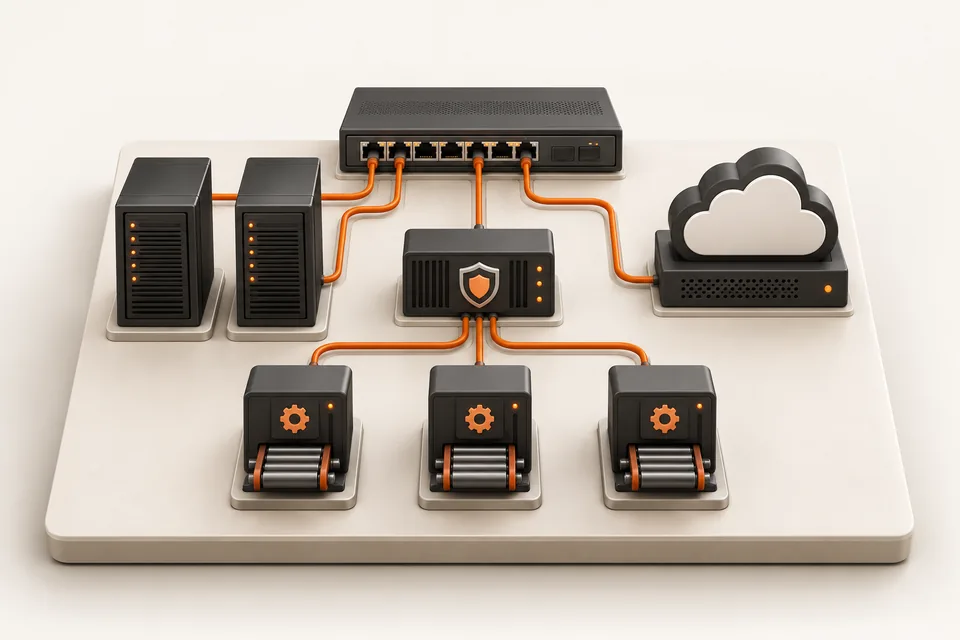
Move from understanding a system to configuring, testing and improving it through guided practice.
Configure a network
Trace connections and practice working with devices and services.
Test what changes
Explore lab scenarios and inspect how configuration choices affect a system.
Build repeatable workflows
Explore Linux, scripting and automation in the relevant learning paths.
Confirm the available labs and access period for your chosen course.
Learn from top 1% engineers.
Meet instructors who bring networking, cloud and automation experience into the classroom.

Atul Sharma
12+ years in networkingNetworking experience spanning Aricent, TCS, Apple and Juniper.

Sanjay Sharma
20+ years of experienceCloud mentor bringing extensive hands-on AWS experience to the classroom.

Amit Bhatt
11+ years of experienceDevOps automation experience at CDAC, IBM and Integrated Solutions.
Industry experience. Practical explanations. A human connection.
Explore Network KingsExplore, talk it through, or enroll.

See the syllabus and fees at your own pace. Request personal guidance when you need help choosing.
Use the enquiry form to share your course interest, or WhatsApp/email to include a callback or guidance request.